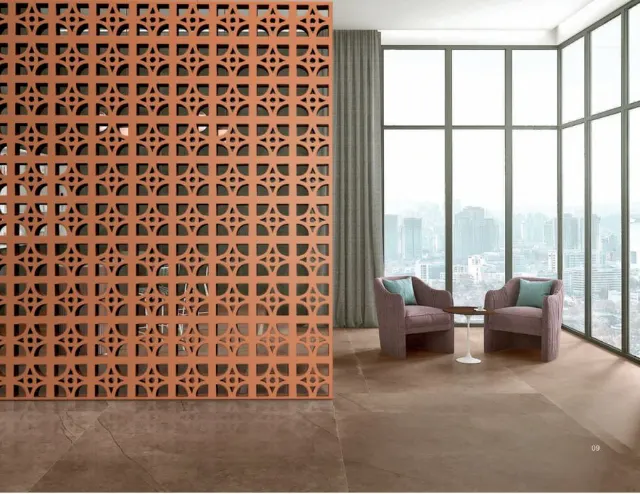
Jali
Three generations of manufacturing craft, distinctive local clay, and terracotta products designed for homes, facades and spaces across India and beyond.
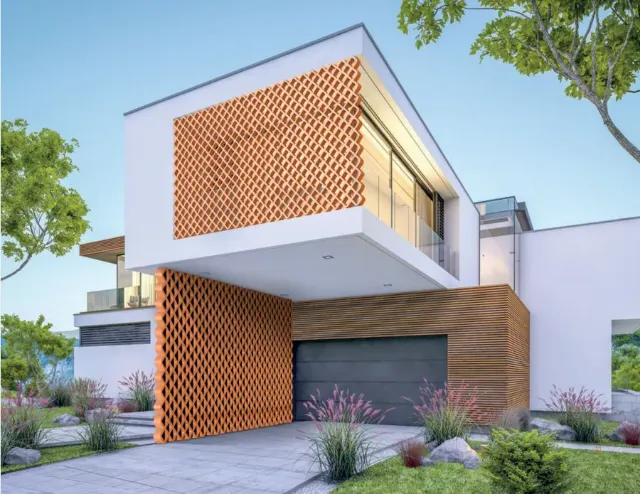
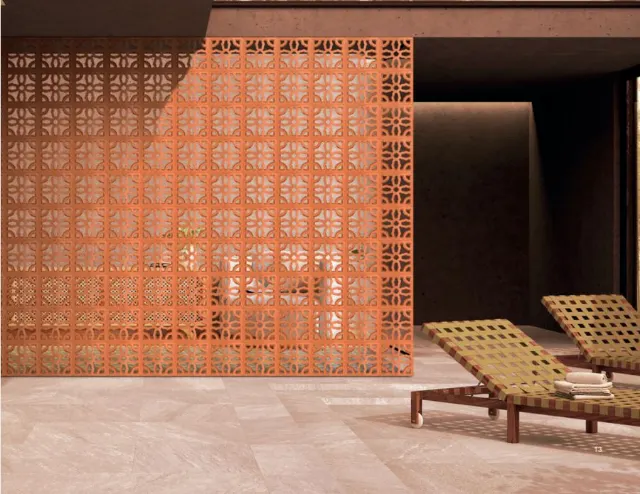
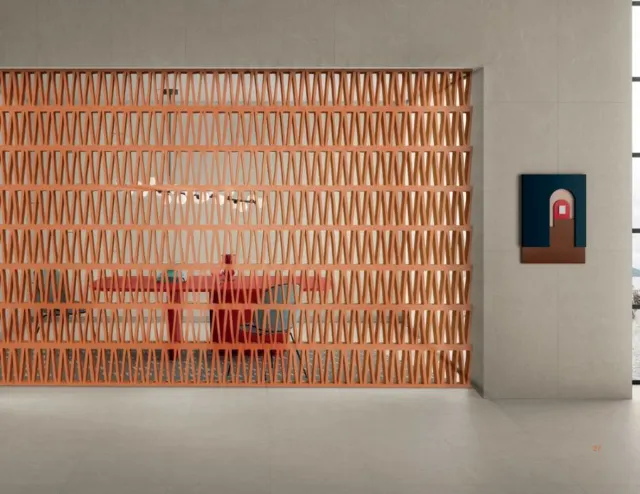
Photographs from customer sites, completed installations and our own showroom — façades and jali screens, roofs seen from below, and courtyards built entirely in clay.
APT's manufacturing story is rooted in clay from Balaghat. The family describes it as having strong binding ability, colour and strength—qualities that help the tiles dry gradually and resist cracking even away from India's traditional coastal tile clusters.
Rice husk and biodegradable by-products are used in firing instead of coal.
The factory reports surplus solar generation compared with its own electricity requirement.
Terracotta roofing and screens can support natural ventilation and reduce heat gain.
Seasonal factory work complements Balaghat's agricultural employment cycle.
Seven stages turn Balaghat clay into finished architectural terracotta — prepared, shaped, rested, fired and checked by hand before dispatch.
APT can explore custom terracotta designs where order volumes make die development practical. Share a sketch, reference or architectural intent and start a manufacturability conversation.
Share your idea →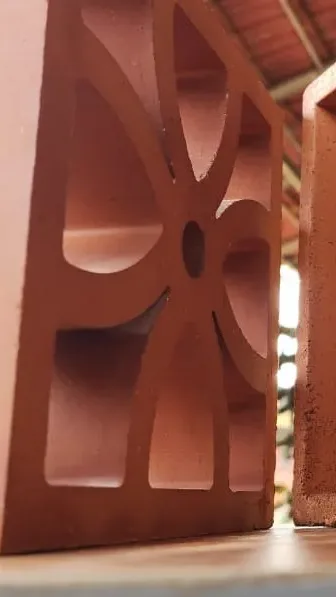 How a custom tile is made
Watch · 1:19
How a custom tile is made
Watch · 1:19
What the works makes, how a tile is made, what sizes exist, and how to get a quotation.
Architectural terracotta: jali screen blocks, facade cladding and edge-cut profiles, plus Mangalore-pattern roofing tiles, ridge tiles, hollow bricks and embossed ceiling tiles. The catalogue lists 27 jali, cladding and edge-cut products with dimensions and technical drawings.
Garden Road, Garra, Balaghat, Madhya Pradesh — inland central India rather than the coastal clusters terracotta is usually associated with. The local Balaghat clay is the reason the works is there: it binds strongly and holds colour, so tiles dry gradually without cracking.
Most jali blocks are 8 × 8 × 2.5 inches; some patterns are 3.5 inches deep. Every catalogue entry carries its exact dimensions and a technical drawing.
Yes, where the order volume makes developing a new die practical. Send a sketch, a reference photograph or simply the architectural intent, and we will tell you whether it can be manufactured and how.
Seven stages. Clay is sourced seasonally, then ground, processed and de-aired. It is pressed into dies, rested 8 to 12 days in drying sheds, and dried gradually in open air. It is then kiln fired at roughly 600 to 1,000°C, and finally checked by hand and packed.
Yes. APT supplies across India and also exports internationally.
Terracotta carries its colour naturally, so it does not need paint, and it keeps a tactile, handmade surface. A jali screen shades a facade while letting air move through it, which is passive cooling rather than mechanical. At the works, production waste is burned as kiln fuel and solar generation exceeds what the plant consumes.
Prices depend on the pattern, the quantity and the delivery location, so quotations are given per enquiry. Message +91 99773 01100 on WhatsApp, email info@apttiles.com, or use the form on this page, with the pattern, approximate quantity and the project location.
Fill this in and we’ll open WhatsApp with your project details pre-filled.
APT Tiles Garden Road, Garra, Balaghat, Madhya Pradesh, India +91 99773 01100 info@apttiles.com WhatsApp, phone and email · English and हिंदी